
Free Calorie Deficit Calculator
Our Free Calorie Deficit Calculator helps you calculate your daily calorie target, macros, and estimated weight loss timeline in just a few seconds.
Frequently asked questions
What Is a Calorie Deficit?
A calorie deficit happens when you consistently consume fewer calories than your body burns. Your body needs energy every day to keep you alive and support everything you do, including breathing, digesting food, thinking, walking, exercising, and recovering. When you eat less energy than your body requires, it makes up the difference by using stored energy, primarily body fat.This is the fundamental principle behind fat loss. While food choices, exercise, sleep, stress, hormones, and genetics all influence your progress, losing body fat requires a calorie deficit over time.A calorie deficit does not mean starving yourself. It means finding a calorie intake that allows you to lose fat at a sustainable pace while still getting enough protein, nutrients, and energy to perform well and feel your best. You can learn more about being a calorie deficit, how to lose fat with our guides. You can also learn here how our web platform, GetFIT App can help you reach your goals!
How Does a Calorie Deficit make you Burn Fat?
Your body burns calories throughout the day in several ways:- Your resting metabolic rate, which is the energy required to keep you alive.- Physical activity, including workouts, walking, and daily movement.- Digestion, which requires energy to process the food you eat.- Non-exercise activity such as standing, cleaning, taking the stairs, or simply moving around.The combination of these factors determines your total daily energy expenditure (TDEE).If your body burns 2,500 calories per day and you consume 2,000 calories, you create a daily deficit of 500 calories. Over time, your body uses stored energy to make up the difference, resulting in fat loss.
Can You Lose Fat Without a Calorie Deficit?
No.Regardless of the diet you follow, whether it is low carb, keto, intermittent fasting, Mediterranean, or any other eating pattern, body fat loss only occurs when you maintain a calorie deficit over time.Different diets can make it easier to eat fewer calories by increasing fullness, reducing hunger, or simplifying food choices. However, the calorie deficit is still the reason fat loss happens.
Is a Calorie Deficit Really Necessary for Fat Loss?
No matter which diet or eating approach you follow, your body needs to use more energy than you consume over time for stored body fat to decrease. Whether you choose keto, low-carb, intermittent fasting, a Mediterranean diet, or a balanced approach, the underlying principle remains the same.Different diets can make maintaining a calorie deficit easier. For example, some people find that higher-protein or higher-fiber foods keep them full for longer, while structured meal plans can make it easier to control portions. These approaches can support fat loss, but they do not replace the calorie deficit itself.
How Large Should Your Calorie Deficit Be?
For most people, a moderate calorie deficit works best.A daily deficit of around 300 to 500 calories is often enough to support steady fat loss while preserving muscle, maintaining energy levels, and making the diet easier to stick with.Very large calorie deficits may produce faster weight loss at first, but they also increase the likelihood of:- Muscle loss- Increased hunger- Lower training performance- Fatigue- Reduced adherence- Nutrient deficienciesThe best calorie deficit is one you can maintain consistently for weeks and months, not just a few days.
How Do You Know If You're in a Calorie Deficit?
The most reliable indicator is your progress over time.Signs that you are likely in a calorie deficit include:Your body weight gradually decreases over several weeks.
Your waist circumference becomes smaller.
Progress photos show visible fat loss.
Clothing begins to fit more loosely.Daily weight fluctuations are completely normal. Water retention, sodium intake, carbohydrates, hormones, and digestion can all cause your weight to change from one day to the next.Instead of focusing on daily changes, look at your weekly average weight and long-term trend.You can learn everything there is to know about getting into a calorie deficit, maintaining it, and how our web app, GetFIT App can help you to reach your goals with our guides & help articles here on our site.
Is a Calorie Deficit Enough for Weight Loss?
A calorie deficit is the requirement for fat loss, but long-term success depends on much more than simply eating fewer calories.Most successful fat loss journeys include:- Consistent eating habits
- Adequate protein intake
- Strength training
- Regular daily movement
- Good sleep
- Patience
- Long-term consistencyThe calorie deficit creates the conditions for fat loss. Healthy habits make it sustainable.
Our platform, GetFIT App makes sticking to calorie deficit simple!
Here's what you can expect by joining us :
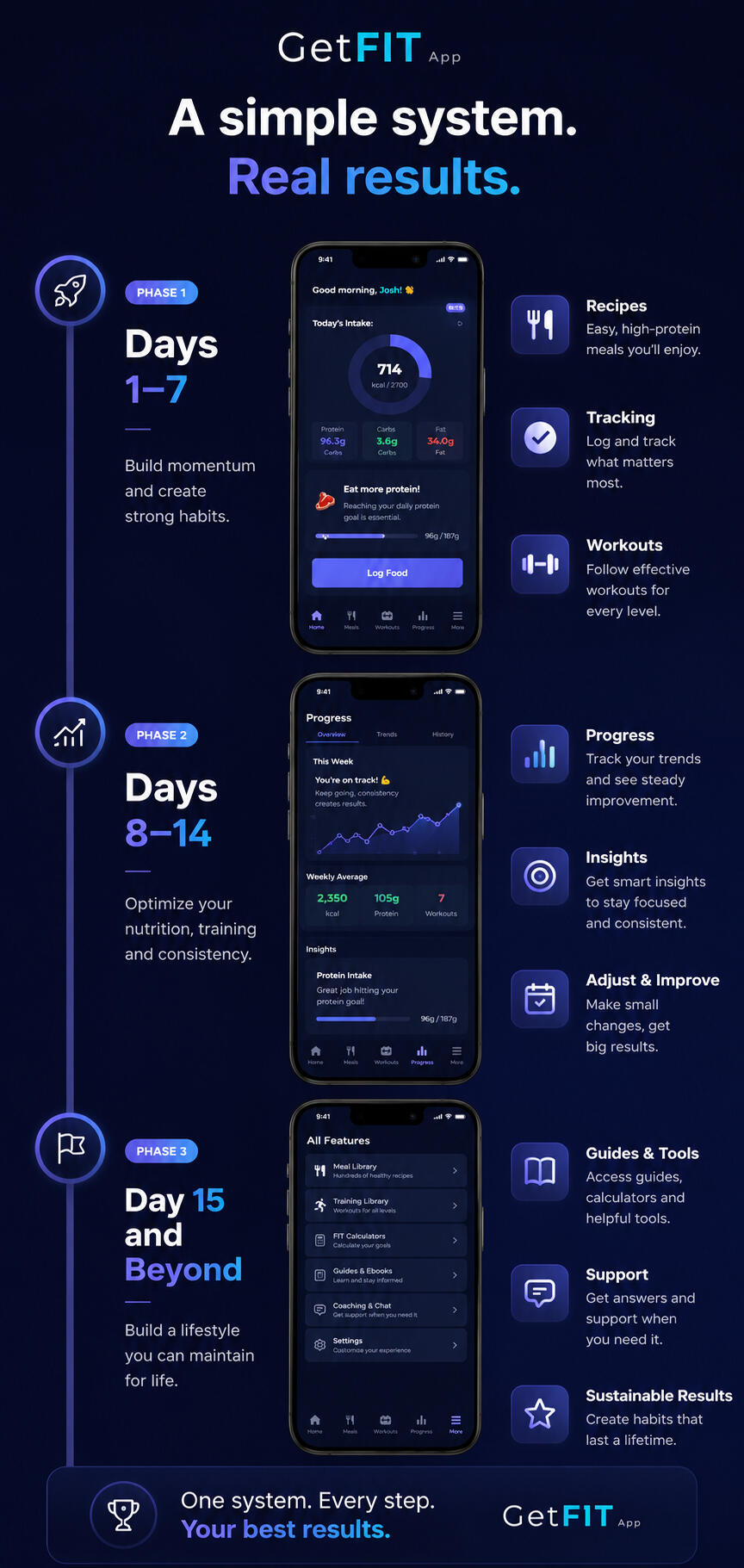
Days 1–7
The scale moves fast in the first week — often 2–4 lbs or more. This is real progress, but a significant portion of it is water weight released as your body burns through glycogen stores when calories and carbs drop. This is normal, expected, and not a reason for skepticism. It's your body responding.
Days 8–14
The rapid early drop levels off. Real fat loss — typically 0.5–1 kg per week — continues at a steadier pace. This is where most 14-day programs fall apart psychologically, because the dramatic early results slow down and people think the plan stopped working. It didn't. This is what sustainable fat loss actually looks like.
Day 15 and Beyond
This is where GetFIT App separates itself. The program doesn't end. Your targets adjust as your body changes. Your workouts progress. Your habits are forming. The first 14 days built the foundation — now you build on it.

Start your Fat Loss Transformation with our Proven Formula!
If you want an easier way to stay consistent, our web application GetFIT App combines calorie and macro tracking with recipe planning, four-week meal plans, structured workout programs, progress tracking, workout logging, habit tracking, and practical guidance in one place.Instead of using multiple apps, PDFs, cookbooks, you can manage your nutrition & training together while working toward your fat loss or muscle-building goals.
Our free calorie deficit calculator is a free online tool designed to help you estimate your daily calorie target for healthy, sustainable weight loss.The information and calculator provided on this website are intended for general educational and informational purposes only and should not be considered medical advice. Individual calorie needs and results may vary. You use this website and its calculations at your own discretion and risk. GetFIT App and its owners accept no liability for any decisions or actions taken based on the information provided. If you have a medical condition or specific health concerns, consult a qualified healthcare professional before making significant changes to your diet or exercise routine.Calorie-deficit.com is a landing page and micro site operated within the GetFIT App brand ecosystem. Some images, graphics, and interface elements displayed on this page are illustrative representations designed to demonstrate features and concepts and may not reflect the exact appearance of the GetFIT App or its interface.
Site featured on :


























This site is owned and maintained by GetFIT App © All rights reserved.